

Found in Translation is our newest book club which started in late 2025.
The group meets on the second Wednesday of every alternate month from 5pm to 6.30pm in the bookshop.
Occasionally the date is moved to accommodate holidays.
Books will be chosen in advance and will rotate around the globe; specifically with the aim of looking at how words are interpreted in translation.
JOIN THE CLUB
The book club meetings are seated events, so places are limited, and events can get pretty full. Please email Jules on jules@northbooks.co.uk to add your name to the list. Participation is free and if the book is purchased in advance from North Books a 10% discount is offered.
At North Books, 4 Castle Street, Hay-on-Wye on Wednesday 11 November, 5-6.30pm.
THE BOOK
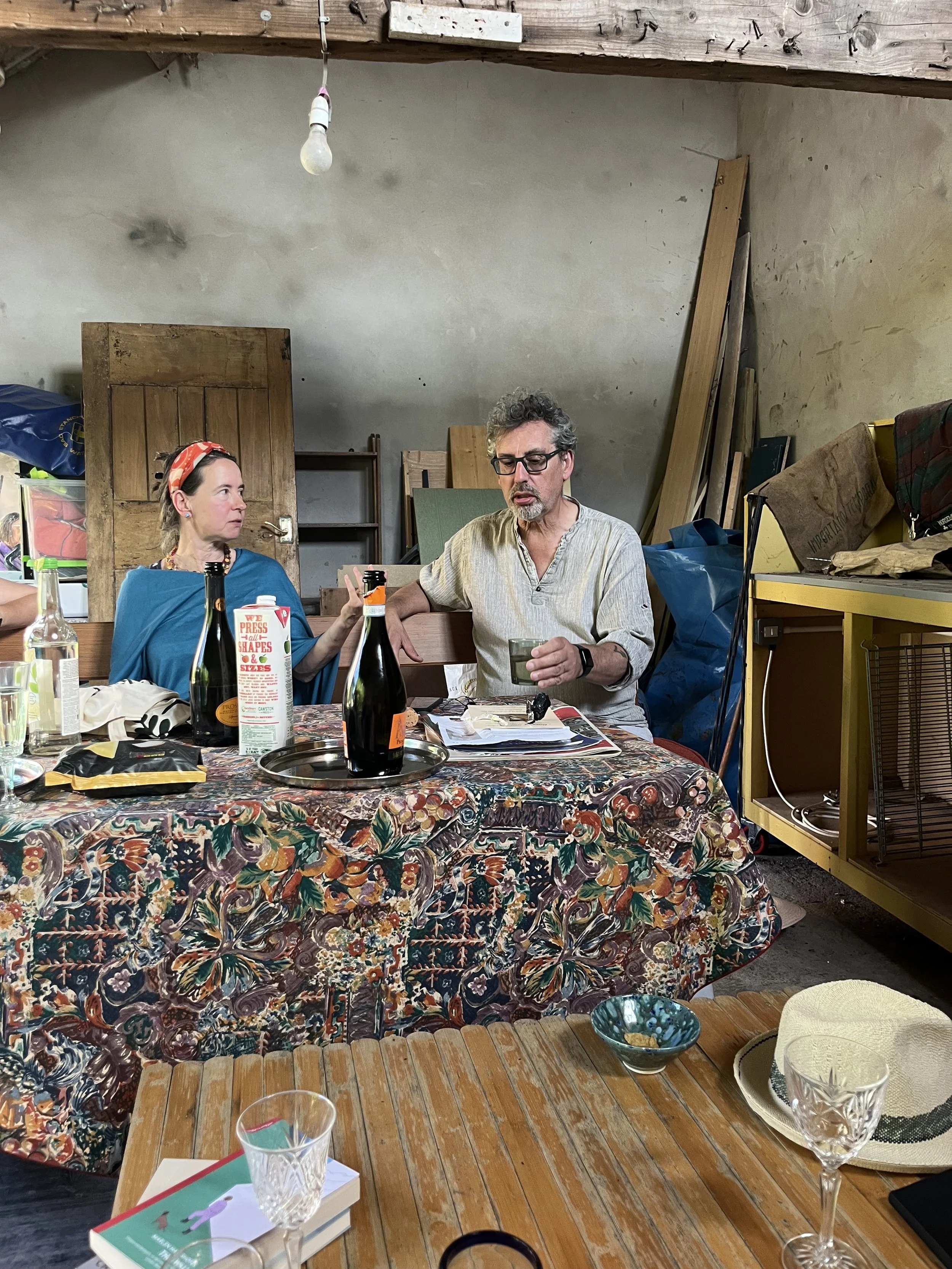
July’s bookgroup met in the bookshop garden room to reflect on year one’s reads.
For this, our second meeting of the group’s second year, we will look at The Dry Heart by Natalia Ginzburg. We’ll also be discussing other earlier translations of this title in order to compare and contrast the changing views of society. Let us know if you are interested in finding out more…
Born in Palermo, Italy, in 1916, Natalia Ginzburg published her first novella, I Bandini, at the age of eighteen in the distinguished Florentine periodical Solaria. She was the first to translate Marcel Proust’s Du côté de chez Swann into Italian. In 1942 her first novel, La strada che va in città (The Road to the City), was published. In 1963 Ginzburg won the Strega Prize for her own humorous autobiographical work, Lessico Famigliare (Family Sayings), which dealt with her family’s anti-fascist life in Turin. In the 1980s Ginzburg became politically active, joining the Communist Party and being elected to Parliament as an independent left-wing deputy in 1983 and 1987. She died in Rome in 1991 at the age of seventy-five.
The Dry Heart begins and ends with the matter-of-fact pronouncement: “I shot him between the eyes.” As the tale—a plunge into the chilly waters of loneliness, desperation, and bitterness—proceeds, the narrator’s murder of her flighty husband takes on a certain logical inevitability. Stripped of any preciousness or sentimentality, Natalia Ginzburg’s writing here is white-hot, tempered by rage. She transforms the unhappy tale of an ordinary dull marriage into a rich psychological thriller that seems to beg the question: why don’t more wives kill their husbands?
Natalia Ginzburg, who constantly wrote about strong women, was herself strong. The children of her second marriage were born handicapped. A son, born in 1959, died at the age of one, but Ginzburg cared for her daughter Susanne (b. 1954) until she herself died of cancer in her beautiful home in Rome in the night of October 6–7, 1991.